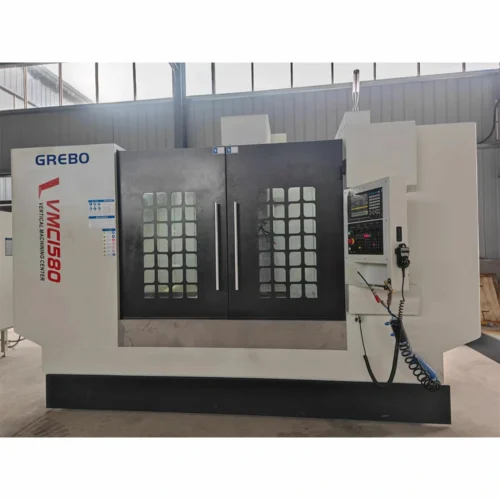

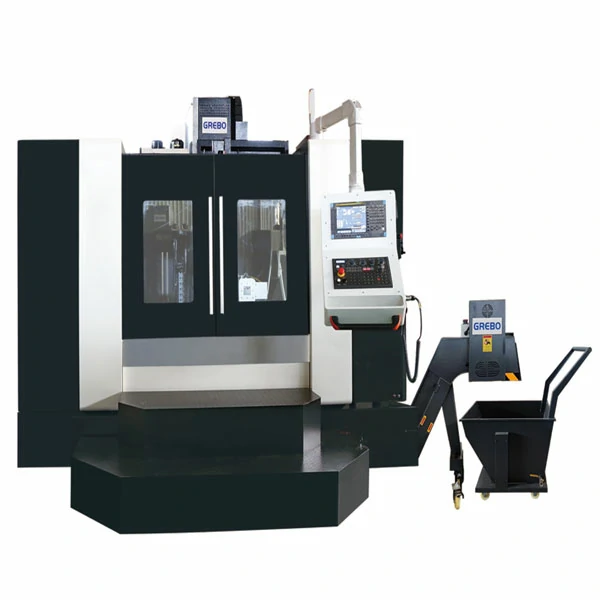
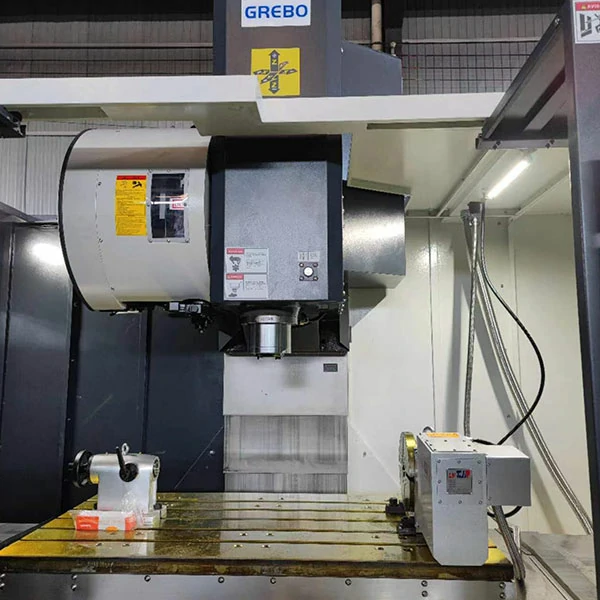
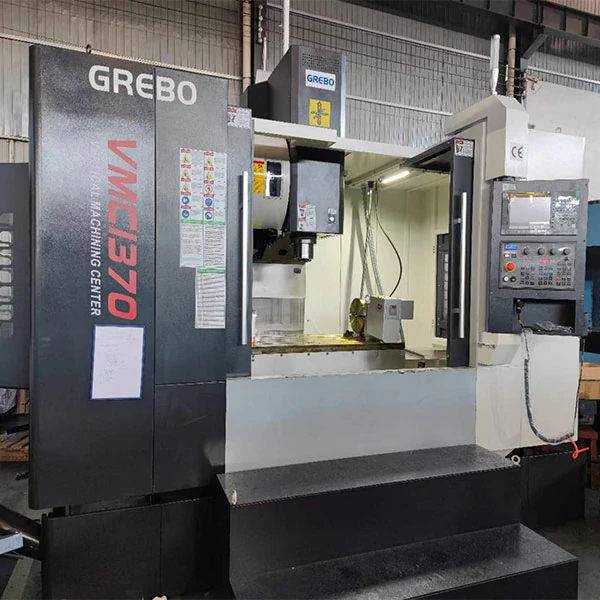
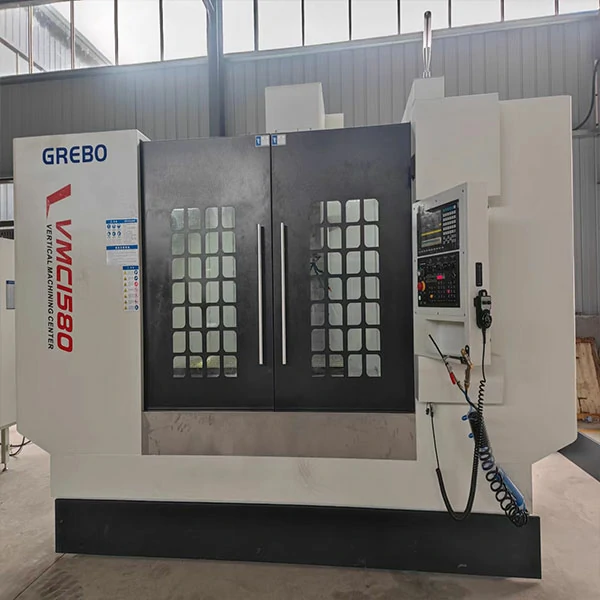
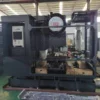
Deep cavity roughing in P20 mold steel often forces shops to slow feed rates when the machine lacks mass. The VMC1580 in this Heavy Duty Vertical Machining Center series weighs 10.5 tons and runs a BT50 spindle with 55 mm roller guideways, sustaining full-load cuts without the chatter that ruins surface finish on lighter machines. Since 2005, our 28,000-square-meter facility in Tengzhou, China, has operated under strict CE-certified manufacturing processes, using HT-300 resin-sand castings and C3 ballscrews to support mold manufacturing shops that need both heavy roughing and precision finishing in one setup.
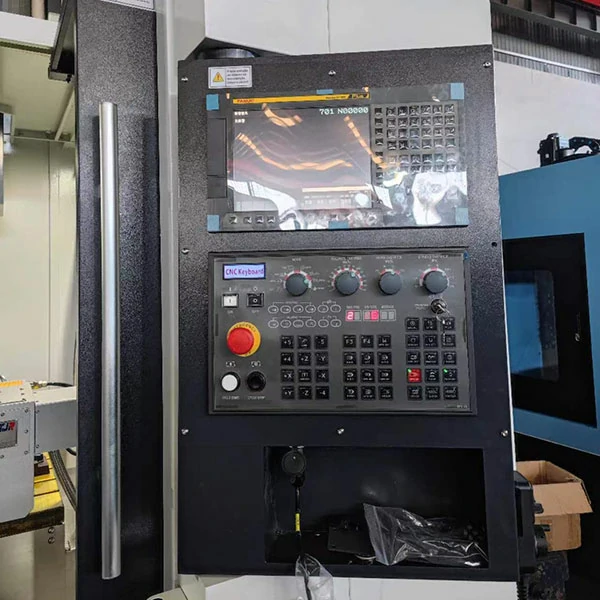
Key Design Features
A Heavy Duty Vertical Machining Center in this series pairs HT-300 castings with roller guideways to sustain cutting loads that would deflect lighter frames.
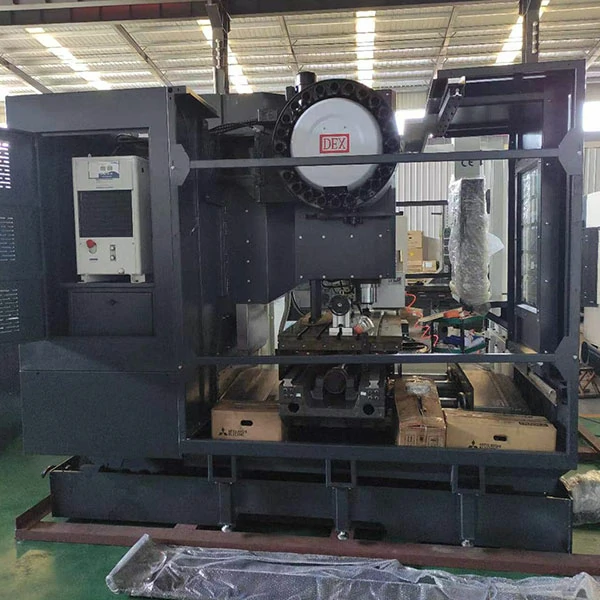
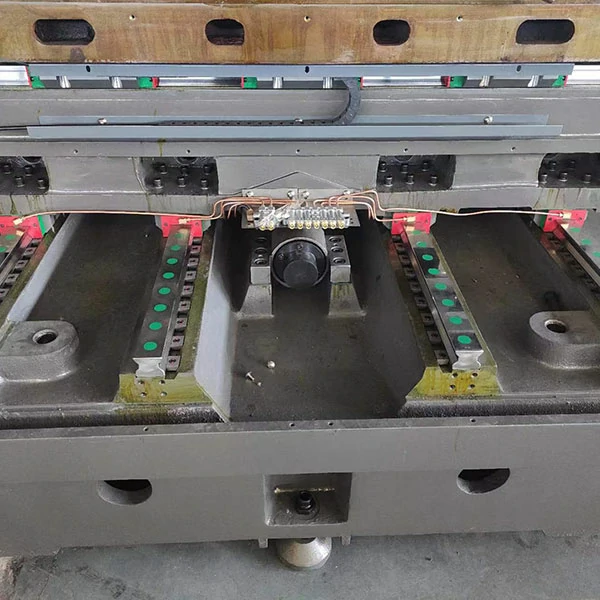
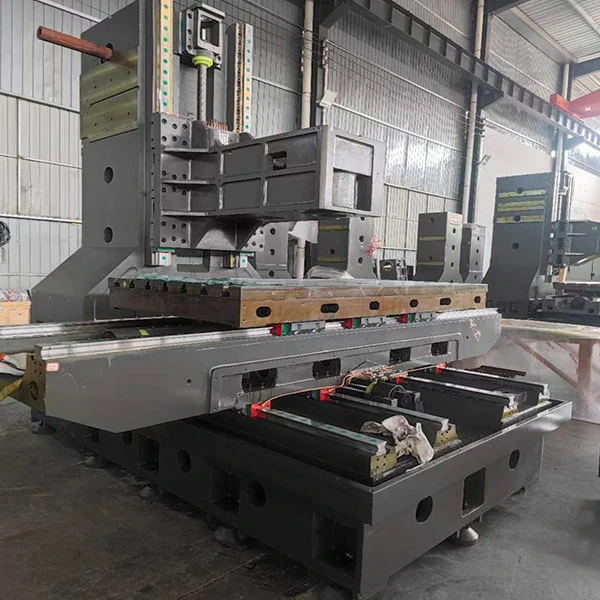
- The HT-300 resin-sand casting on both models delivers 8.8 to 10.5 tons of bed mass, so the frame absorbs cutting vibration during aggressive mold-steel roughing instead of transferring it to the tool tip.
- The VMC1580 uses Φ50 ballscrews with a 10 mm pitch paired with 55 mm roller guideways. This increases Z-axis thrust by roughly 25% over smaller pitch setups and supports deeper cuts in hardened cavities.
- The BT50 taper and 18.5 kW spindle power on the VMC1580 handle 120 mm diameter cutters at an 8 kg tool weight. Heavy face-milling on large mold bases runs at full rated load without belt slip.
Engineering Insights
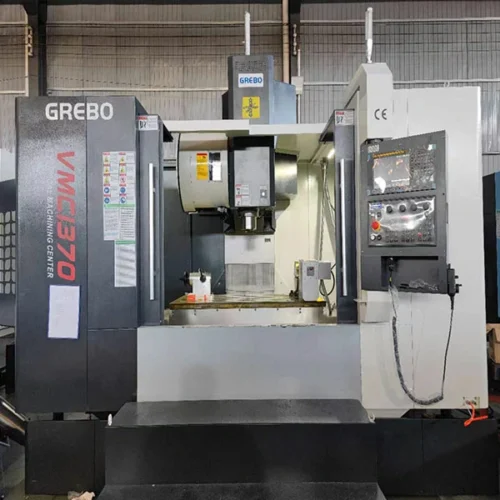
Between the two models, the choice comes down to load: the VMC1370’s BT40 taper and 45 mm guideways suit mold inserts and medium-size cavity finishing where 0.005 mm repeat accuracy matters more than brute torque, while the VMC1580’s BT50 taper and 55 mm guideways deliver the extra thrust needed to feed deeper into hardened steel without stalling.
If your workpiece stays within 1400 mm and you machine mostly pre-hardened inserts, the VMC1370 avoids the extra floor space and spindle mass. If you rough large mold bases above 1000 kg, the VMC1580 holds the advantage.
For plates under 800 mm, a standard vertical machining center fits better and costs less to run. If you need tables beyond 1600 mm, move up to our large vertical machining center D series. Confirm the arm-type tool changer in writing before contracting. Disc-type magazines add 3–4 seconds per change and raise tool-drop risk on heavy cutters.
Technical Specifications
The specification table compares VMC1370 and VMC1580 travel, spindle power, and guideway ratings side by side.
| Item | Description | Unit | VMC1370 | VMC1580 |
|---|---|---|---|---|
| X/Y/Z axis travel | X/Y/Z axis travel | mm | 1300 / 700 / 700 | 1500 / 800 / 700 |
| Spindle nose to worktable distance | Spindle nose to worktable distance | mm | 100 – 800 | 160 – 860 |
| Spindle center to column distance | Spindle center to column distance | mm | 773 | 855 |
| Lead screw diameter (X/Y/Z) | Lead screw diameter (X/Y/Z) | mm | Φ45 / Φ45 / Φ45 | Φ50 / Φ50 / Φ50 |
| Pitch | Pitch | mm | 12 | 10 |
| Linear guideway (X-axis) | Linear guideway (X-axis: Width/Type, Qty, Block Qty) | – | 45mm roller / 2 rails / 6-8 blocks | 55mm roller / 2-4 rails / 6-8 blocks |
| Linear guideway (Y-axis) | Linear guideway (Y-axis: Width/Type, Qty, Block Qty) | – | 45mm roller / 2 rails / 6 blocks | 55mm roller / 2 rails / 6 blocks |
| Linear guideway (Z-axis) | Linear guideway (Z-axis: Width/Type, Qty, Block Qty) | – | 45mm roller / 2 rails / 6 blocks | 55mm roller / 2 rails / 6 blocks |
| Worktable size | Worktable size | mm | 1400 × 700 | 1600 × 800 |
| Max loading capacity | Max loading capacity | kg | 1000 | 1500 |
| T-slots | T-slots (No. × width × distance) | mm | 5 × 18 × 110 | 7 × 22 × 110 |
| Spindle taper | Spindle taper | – | BT40 | BT50 |
| Spindle speed | Spindle speed (Standard / Opt.) | rpm | 8000 (10000/12000) | 8000 |
| Main motor power | Main motor power | kW | 11 / 15 / 18.5 | 15 / 18.5 |
| Fast traverse rate (X/Y/Z) | Fast traverse rate (X/Y/Z) | m/min | 24 / 24 / 24 | 20 / 20 / 20 |
| Cutting feed rate | Cutting feed rate | mm/min | 1 – 10000 | 1 – 10000 |
| Feed motor power (X/Y/Z) | Feed motor power (X/Y/Z) | kW | 4.5 / 4.5 / 4.5 | 4.5 / 4.5 / 4.5 |
| Tool magazine | Tool magazine capacity & type | pcs | 24, Arm type | 24, Arm type |
| Max tool diameter | Max tool diameter | mm | 120 (adjacent empty pocket) | 120 (adjacent empty pocket) |
| Max tool weight | Max tool weight | kg | 8 | 8 |
| Max tool length | Max tool length | mm | 300 | 300 |
| Positioning accuracy | Positioning accuracy | mm | 0.008 | 0.008 |
| Repeat accuracy | Repeat accuracy | mm | 0.005 | 0.005 |
| Machine dimensions (L×W×H) | Machine dimensions (L×W×H) | mm | 3700 × 2600 × 3100 | 4100 × 2800 × 3600 |
| Machine weight | Machine weight | kg | 8800 | 10500 |
Positioning and repeat accuracy values follow ISO 230-2:2014 test procedures. CNC system options include FANUC, MITSUBISHI, SIEMENS, SYNTEC, and GSK.
Standard Configuration
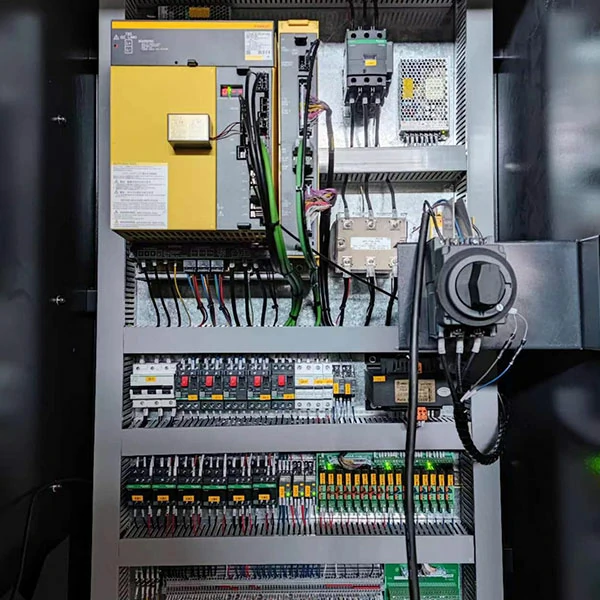
Production-ready equipment in this series includes a Mitsubishi M80A control, nitrogen balance, and fully enclosed guarding as baseline equipment.
- Mitsubishi M80A control system
- Taiwan direct-drive or belt-drive spindle (Kenturn or Royal)
- X/Y/Z axis Mitsubishi servo drive motors
- Mitsubishi spindle motor
- USB for information transfer
- Thread cutting function
- Rigid tapping
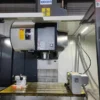
- Fully enclosed cover
- Stainless steel telescopic covers on rails
- Spindle coolant system
- Headstock nitrogen balance cylinder
- Centralized automatic lubrication system
- Work lamp
- Tri-color indication lamp
- Manual pulse generator (MPG)
- 24-pocket arm tool changer
- Air gun and water gun
- Air through spindle (ATS)
- Leveling blocks and bolts
- Taiwan HIWIN 3-axis roller linear guideway
- Taiwan HIWIN ball lead screw
- Taiwan pneumatic cylinder
- Spindle center ring blast
- Auto interrupt and power off system (M30)
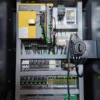
- Heat exchanger for electrical cabinet
- Chain type chip conveyor and chip bucket
- Safety door
- User manual
Typical Application Cases for This Heavy Duty Vertical Machining Center
These application cases demonstrate how VMC1370 precision and VMC1580 rigidity translate into measurable shop-floor results.
Typical Application: Deep Cavity Roughing on Large Mold Bases
P20 steel mold bases with deep cavities generate side loads that deflect lighter machines. The VMC1580 addresses this with its 10.5-ton HT-300 bed and 55 mm roller guideways. The BT50 taper and 18.5 kW spindle sustain deep roughing without chatter.
- Repeat accuracy holds 0.005 mm after heavy roughing passes.
- The 1600 × 800 mm table supports mold halves up to 1500 kg.
- Surface finish remains stable across full table travel during actual cuts.
Typical Application: Precision Mold Insert Machining
Mold inserts for multi-cavity injection tools need consistent bore-to-face accuracy across batch runs. The VMC1370 delivers this with its 1400 × 700 mm table and 0.005 mm repeat accuracy. The BT40 taper and 45 mm guideways maintain positioning stability during fine profiling.
- Positional tolerance stays within 0.008 mm over continuous batch runs.
- The 24-tool magazine supports drilling, tapping, and contouring without re-clamping.
- Rigid tapping at 12 mm pitch maintains thread accuracy on M16 holes.
Typical Application: Multi-Side Machining of Large Structural Parts
Heavy mechanical bases require milling, boring, and drilling on multiple faces. Moving the part between machines adds setup time and accumulates error. The VMC1580 completes these operations in one fixturing with its 1500 × 800 mm table and 700 mm Z stroke.
- Single-setup machining reduces fixture changeovers and cumulative positioning error.
- The 24-pocket arm changer supports continuous multi-tool sequences.
- Even after long shifts, repeat accuracy holds 0.005 mm across all four faces.
Frequently Asked Questions
These answers cover gantry comparison, tool change speed, accuracy maintenance, and rotary axis upgrades for this equipment line.
What is the difference between a VMC and a gantry machining center?
A vertical machining center uses a moving-column design with the spindle traveling over a fixed table, which suits workpieces up to roughly 1500 kg. A gantry machining center fixes the spindle between two columns and moves the table, which handles wider mold bases and heavier loads beyond 2000 kg.
What is the typical tool change time and does it affect cycle time on small batches?
Arm-type tool changers on this series swap tools in roughly 1.5 to 2.5 seconds. On small batches with fewer than ten tools per part, that speed keeps non-cutting time under 5% of total cycle time, so batch flexibility stays high without pallet automation.
How does the machine maintain accuracy over long unattended runs?
The centralized lubrication system feeds C3 ballscrews and roller guideways at timed intervals. HT-300 castings with stress-relief treatment control thermal drift, which is why positioning accuracy holds 0.008 mm and repeat accuracy stays at 0.005 mm across extended shifts.
Is a fourth-axis upgrade worth it for prismatic parts?
For prismatic mold inserts with angled holes or helical coolant channels, a fourth-axis rotary table reduces manual repositioning. It adds setup complexity and cost, so it pays off only when angled features exceed 20% of your total machining time.
Request a technical review of this Heavy Duty Vertical Machining Center series, and we will send you a configuration sheet within 24 hours.