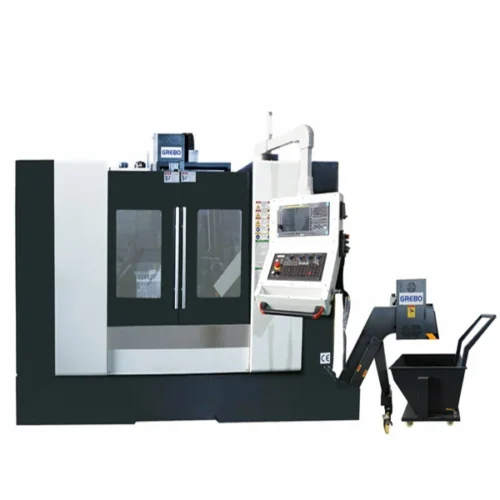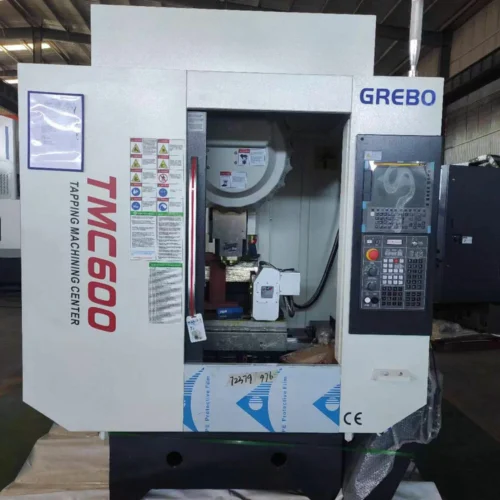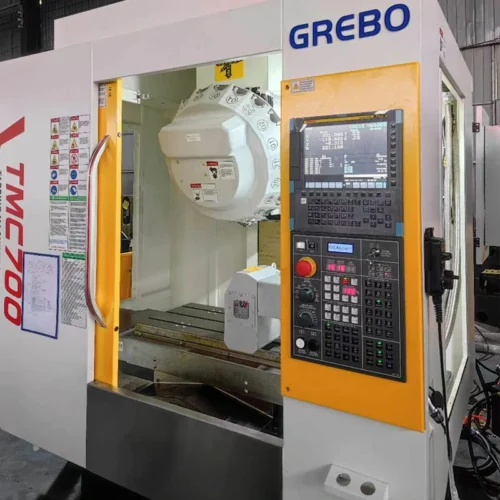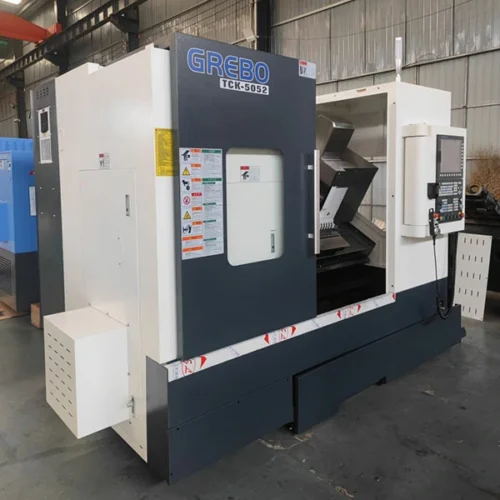

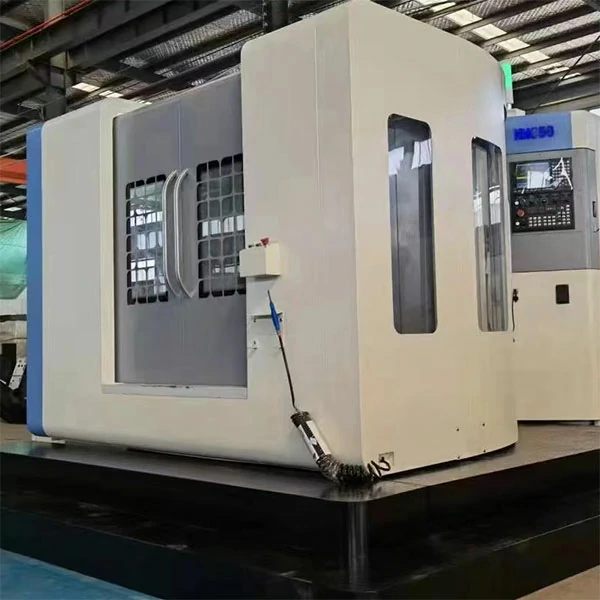
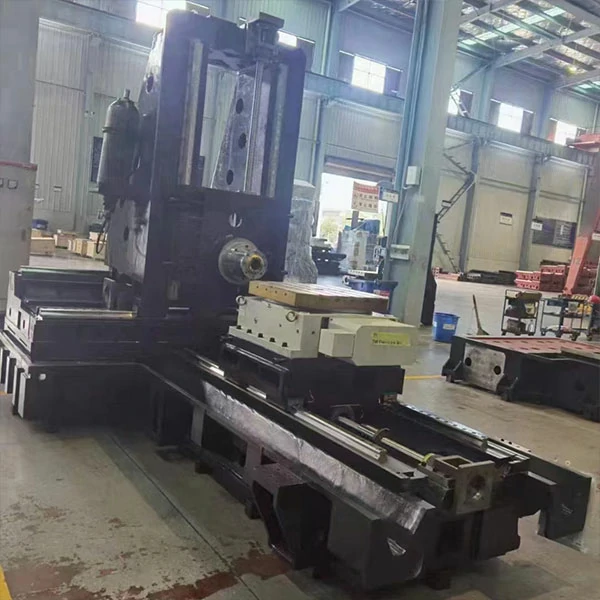
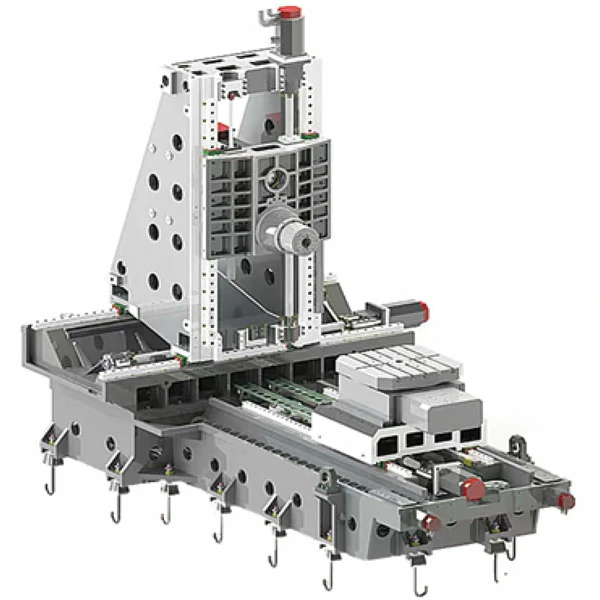
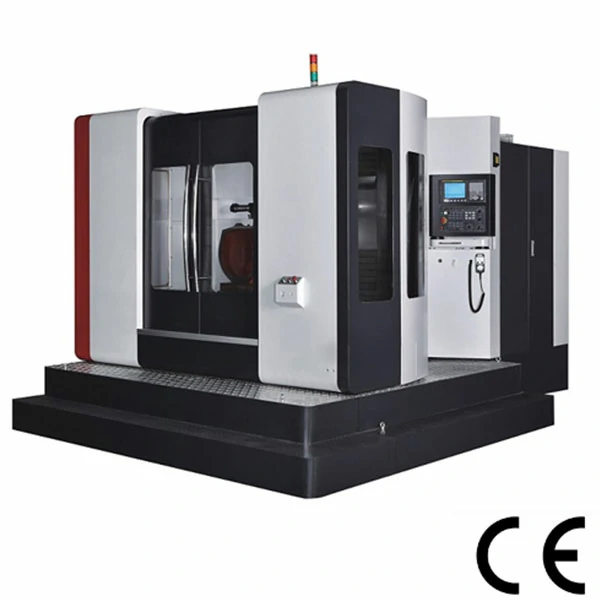
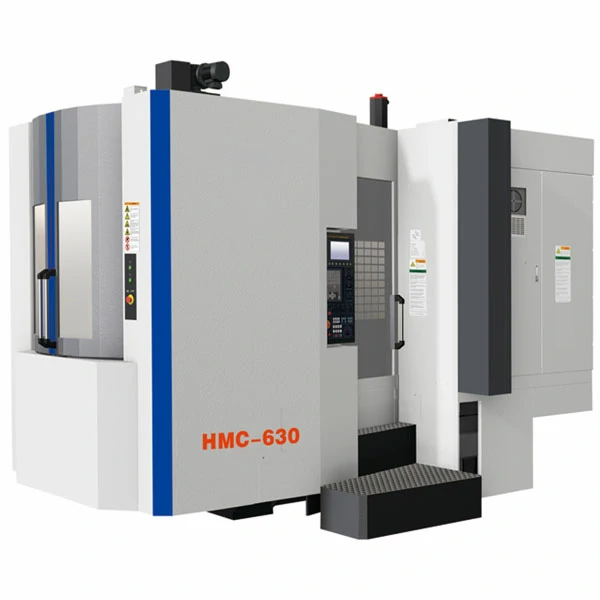
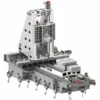
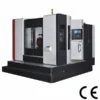
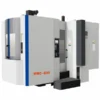
This design eliminates repeated setups, helping maintain strict datum consistency and streamlining the machining process for complex housings.
Applications
This horizontal machining center is engineered for multi-face housing work rather than single-face milling, which defines its ideal use cases.
- Engine blocks and transmission housings undergo drilling, boring, and tapping across multiple faces under B-axis indexing, which helps eliminate the need for secondary clamping to re-establish datums.
- The HMC630 and HMC800 handle hydraulic valve bodies and pump housings mounted on the T-slot table. They complete cross-hole boring and milling in a single horizontal spindle pass, while gravity-fed chip clearance reduces the risk of surface marking.
Industries
Automotive powertrain manufacturing relies on this configuration for engine blocks and transmission housings that require multiple bore and thread features finished in a single setup, which helps reduce the coaxiality error that accumulates across repeated reclamping. Broader automotive component work built around this same multi-face logic is covered on the automotive industry application page.
Not every part suits this frame. If the workpiece is a single-face component rather than a box-type housing, the multi-face advantage of a horizontal machining center goes unused, making an A series vertical machining center the more cost-effective choice.
Horizontal Machining Center Key Features
The guideway and ballscrew sizing on this series targets sustained heavy milling rather than light-duty finishing, which drives the specification choices below.
- Φ50x10mm C3-grade direct-drive ballscrews on all three axes resist resonance and thermal growth over the 1000mm-plus travel range, helping maintain positioning accuracy under repeated heavy cuts.
- Roller linear guideways (55mm on X, 45-55mm on Y/Z depending on the model) provide higher contact stiffness than conventional ball guideways, helping resist the tipping moments generated when milling box-type castings and improving resistance to cutting loads and vibration.
- A nitrogen balance system on the vertical axis prevents the heavy spindle head from dropping during power loss or maintenance, a critical safety feature for horizontal machining centers of this scale.
- The B-axis rotary table features positioning accuracy up to 0.001°. This accuracy, consistent with ISO 230-2 testing methods, helps ensure the datum remains consistent, allowing a housing part to complete four-face machining without leaving the fixture.
- The 18.5kW BT50 spindle sustains low-speed torque during cast iron and steel milling, which helps maintain cutting speed through interrupted cuts.
Engineer’s note: for stainless steel or high-temperature alloy deep-hole work, external coolant rarely reaches the cutting zone. We highly recommend specifying the 20 bar or 30 bar centre-through spindle coolant (CTS) option at the time of order.
HMC630 vs HMC800: Model Selection Guide
Choosing the right model depends on your workpiece size and fixture requirements.
| Feature | HMC630 | HMC800 |
|---|---|---|
| Best for | Medium housing parts | Large castings |
| Table Size | 630 x 630 mm | 800 x 800 mm |
| Max. Load | 1200 kg | 1600 kg |
| Typical Parts | Valve bodies, pump housings | Engine blocks, transmission housings |
Technical Specifications
The table below compares table size, load capacity, spindle, and guideway specifications across both models in this horizontal machining center series.
| Item | Unit | HMC630 | HMC800 |
|---|---|---|---|
| Table size | mm | 630 x 630 | 800 x 800 |
| Number of worktables | – | 1 (single station) | 1 (single station) |
| Max. loading capacity | kg | 1200 | 1600 |
| B-axis positioning accuracy | deg | up to 0.001° | up to 0.001° |
| T-slots (No. x width x distance) | mm | 5 x 18 x 100 | 5 x 22 x 160 |
| X/Y/Z axis travel | mm | 1200 / 800 / 1000 | 1100 / 900 / 1020 |
| Spindle nose to table center | mm | 130 – 930 | 180 – 1200 |
| Spindle center to table surface | mm | 100 – 1100 | 40 – 940 |
| Spindle taper & Max speed | – / rpm | BT50 / 6000 | BT50 / 6000 |
| X/Y/Z axis ball screw | mm | Φ50×10, C3 grade (direct drive) | Φ50×10, C3 grade (direct drive) |
| Spindle motor power | kW | 18.5 | 18.5 |
| Fast traverse rate (X/Y/Z) | m/min | 20 / 20 / 20 | 20 / 20 / 20 |
| Linear guideway (X-axis) | – | 55mm roller / 2 rails | 55mm roller / 2 rails |
| Linear guideway (Y-axis) | – | 45mm roller / 2 rails | 55mm roller / 2 rails |
| Linear guideway (Z-axis) | – | 45mm roller / 2 rails | 55mm roller / 2 rails |
| X/Y/Z axis positioning accuracy | mm | 0.008 | 0.008 |
| X/Y/Z axis repeat accuracy | mm | 0.005 | 0.005 |
| Machine weight | kg | 13000 | 16000 |
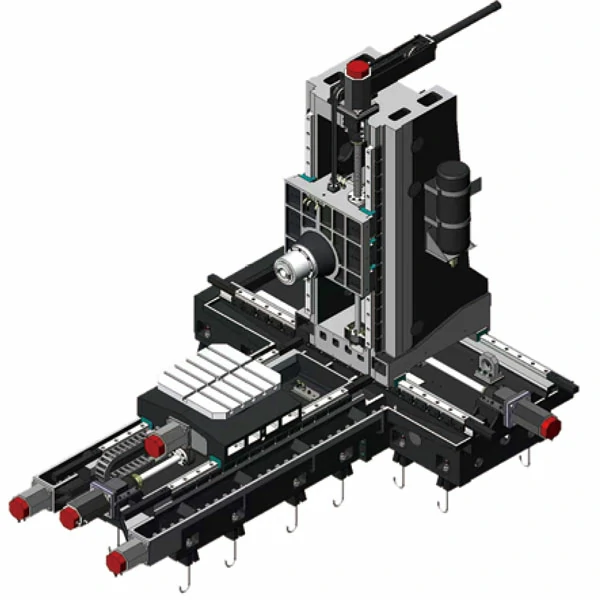
Standard Configuration
Standard equipment on this horizontal machining center covers control, tooling, chip handling, and axis safety hardware shared across both models.
- FANUC 0i-MF control system
- 24-tool disc-type ATC
- Fully enclosed protective cover
- Automatic lubrication system
- Coolant system
- Work lamp
- Three-color warning light
- Cabinet heat exchanger
- Automatic chip conveyor (chain or screw type)
- Nitrogen balance system (Z-axis or Y-axis)
Optional Configuration
Optional upgrades on this series add deep-hole coolant delivery, extended tool capacity, and thermal stability hardware beyond the standard build.
- 20 bar Centre-Through Spindle (CTS) coolant
- 30 bar Centre-Through Spindle (CTS) coolant
- Spindle oil chiller
- 30-tool disc-type ATC
- 40-tool chain-type ATC (Taiwan brand)
- Cabinet air conditioner
- Coolant oil skimmer
Typical Application Case
The scenario below describes a typical machining application for this series based on its published parameters, rather than a specific customer project.
Typical Application: Automotive Powertrain Housings — One-Setup Four-Face Machining
Engine blocks and transmission housings feature numerous bearing bores, oil passages, and threaded holes that require multi-face machining. On a vertical machining center, this typically requires repeated reclamping, which adds handling time and risks datum loss between faces. Cast iron chips can also wrap around the tool or mark the finished bore surface during these transitions.
Operating as a horizontal machining center for automotive parts, the HMC630 and HMC800 use B-axis positioning accuracy up to 0.001° to complete four-face machining in a single fixture setup for suitable housing parts, helping ensure the datum remains consistent. Gravity-fed chip drop, combined with the automatic chip conveyor, clears cast iron chips before they can recut the finished bore surface. Meanwhile, the 18.5kW BT50 spindle maintains torque through repeated boring and drilling without losing speed.
- Single-setup four-face machining helps eliminate 2-3 reclamping steps per part
- A disc-type ATC with a short tool change time suits tool-change-heavy batch cylinder block production
- Gravity chip clearance lowers the risk of recut marking on finished bore surfaces
Why Choose GREBO Horizontal Machining Centers?
- CNC machine manufacturing expertise since 2005
- Proven export experience to over 50 countries
- CE-certified production standards
- Dedicated engineering support before and after shipment
FAQ
Why choose a horizontal machining center over a vertical one for box-type parts?
A horizontal machining center lets a box-type part rotate on the B-axis table to present each face to the spindle without unclamping, which keeps the reference datum consistent across every operation. A vertical machine typically needs a separate setup per face, which adds handling time and coaxiality risk between features.
Can an HMC handle multi-face machining in a single fixture setup?
Yes, the B-axis table on this series features positioning accuracy up to 0.001°, which lets a housing part complete drilling, boring, and tapping across multiple faces without leaving the fixture. This holds positional relationships between faces that would otherwise depend on reclamping accuracy.
What tooling considerations apply to horizontal boring operations?
The standard 24-station disc-type tool magazine suits parts with concentrated, frequent tool changes, while the optional 40-tool chain-type magazine handles jobs needing a wider range of drills, boring bars, and cutters. Centre-through coolant options also matter once boring reaches into deep or hard-to-reach bores.
What industries most commonly use horizontal machining centers?
Automotive powertrain manufacturing is a core user, machining engine blocks and transmission housings that need multiple faces finished in one setup. Hydraulic valve body and pump housing production also relies on this configuration for cross-hole boring and milling on complex box-type parts.
What is the difference between the HMC630 and HMC800?
The HMC630 is optimized for smaller housing parts and standard fixtures, offering a compact footprint. The HMC800 is designed for larger castings and heavier fixtures, providing a larger table size (800x800mm) and a higher maximum loading capacity (1600kg).
What CNC control systems are available?
The standard configuration features the FANUC 0i-MF control system. However, we can accommodate requests for Siemens, Mitsubishi, or other specific control systems based on your facility’s standardization requirements.
Need help matching an HMC model or tool magazine option to your housing part? Our engineers can review your drawing and cutting requirements.
Shandong GREBO Machine Tool has manufactured CNC machine tools since 2005 in Tengzhou, Shandong, and holds an ISO 9001-certified quality management system and CE certification, exporting to over 50 countries.